


In today’s increasingly regulated world, organizations are under constant pressure to follow laws, industry standards, and internal policies. Whether operating in finance, healthcare, manufacturing, technology, or education, companies must demonstrate that they are meeting regulatory expectations consistently. This is where compliance monitoring becomes a critical business function rather than a background administrative task.
Compliance monitoring is not only about avoiding fines or penalties. It is about building trust, ensuring operational integrity, and maintaining long-term sustainability. As regulations evolve and risks grow more complex, organizations that fail to actively monitor compliance expose themselves to legal, financial, and reputational damage. This article explores compliance monitoring in depth, covering its purpose, processes, benefits, challenges, and future direction.
Understanding the Basics of Compliance Monitoring
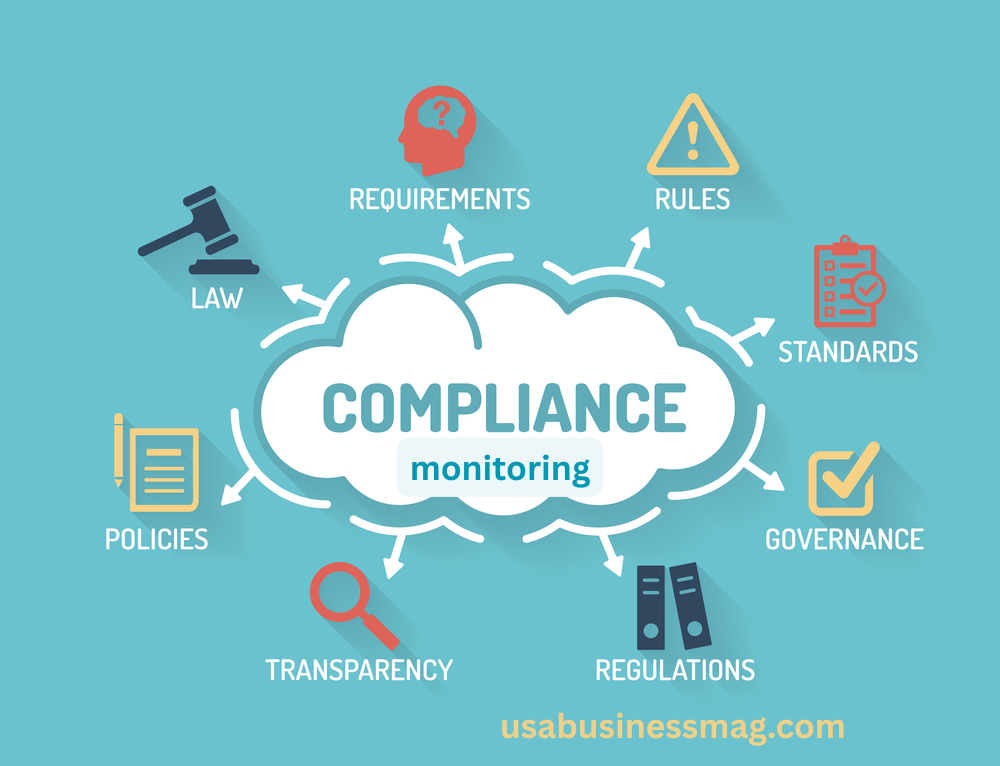
Compliance monitoring refers to the ongoing process of reviewing, assessing, and verifying whether an organization’s activities align with applicable laws, regulations, standards, and internal policies. Unlike one-time audits, it is a continuous activity designed to identify issues early and correct them before they escalate.
Organizations operate within multiple regulatory frameworks depending on their industry and location. These may include data protection laws, financial regulations, workplace safety standards, environmental rules, or ethical guidelines. Compliance monitoring ensures that day-to-day operations do not drift away from these requirements.
At its core, compliance monitoring focuses on visibility and accountability. It helps management understand what is happening across departments and whether established controls are functioning as intended.
Why Compliance Monitoring Is Essential for Modern Organizations
Compliance monitoring has become essential because regulatory environments are more complex and enforcement is stricter than ever before. Regulators now expect organizations to proactively identify and manage compliance risks rather than react after violations occur.
Beyond legal obligations, compliance monitoring supports organizational credibility. Customers, investors, and partners increasingly evaluate companies based on how responsibly they operate. A strong compliance posture signals reliability and professionalism.
Additionally, compliance monitoring helps reduce operational disruptions. Regulatory breaches often lead to investigations, shutdowns, or costly remediation efforts. By identifying risks early, organizations can maintain smoother operations and protect their long-term interests.
Key Components of an Effective Compliance Monitoring Framework
An effective compliance monitoring framework is built on several interrelated components. First, there must be clearly defined policies and procedures that outline compliance expectations. Without clarity, monitoring efforts lack direction.
Second, risk assessment plays a central role. Organizations need to identify which regulations apply to them and where the highest risks exist. This allows resources to be allocated efficiently rather than spreading efforts too thin.
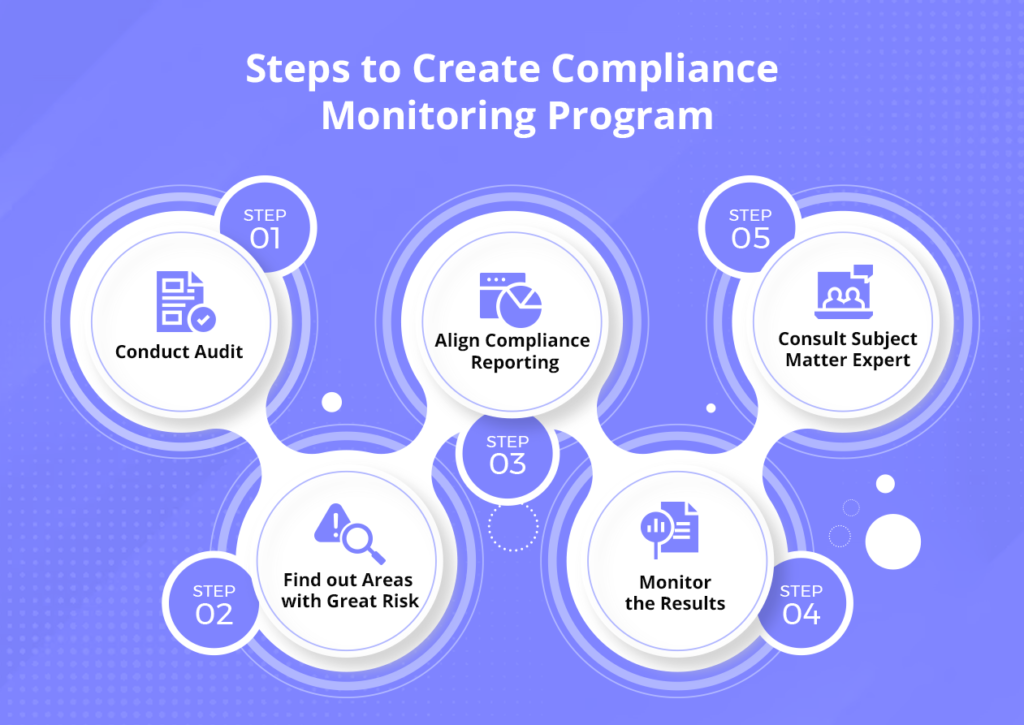
Third, monitoring activities must be documented. Evidence of compliance, such as logs, reports, and corrective actions, is critical when dealing with regulators or auditors. Finally, communication and training ensure that employees understand their responsibilities and the importance of compliance monitoring in their daily roles.
Compliance Monitoring vs. Compliance Auditing
Although compliance monitoring and auditing are closely related, they serve different purposes. Compliance auditing is typically periodic and retrospective. Audits assess whether controls worked effectively over a defined period and often involve independent reviewers.
Compliance monitoring, on the other hand, is continuous and proactive. It focuses on real-time or near-real-time oversight of processes and behaviors. Instead of waiting for an audit to uncover problems, monitoring allows organizations to detect and address issues as they arise.
Both functions complement each other. Strong compliance monitoring can reduce audit findings, while audit results can help refine monitoring strategies.
Industries Where Compliance Monitoring Plays a Critical Role
Compliance monitoring is particularly vital in highly regulated industries. In healthcare, it ensures adherence to patient privacy laws, billing regulations, and safety standards. In finance, it supports compliance with anti-money laundering rules, consumer protection laws, and reporting requirements.
Manufacturing organizations rely on compliance monitoring to meet environmental regulations and workplace safety standards. Technology companies use it to manage data protection, cybersecurity obligations, and intellectual property rules. Even smaller businesses benefit from compliance monitoring by ensuring fair employment practices and ethical conduct.

Regardless of industry, organizations that ignore compliance monitoring face increasing scrutiny and risk.
The Role of Technology in Compliance Monitoring
Technology has transformed compliance monitor by making it more efficient and scalable. Manual processes are no longer sufficient in environments with large volumes of data and complex regulatory requirements. Automated tools can track transactions, user behavior, access controls, and policy adherence in real time.
Compliance software often includes dashboards, alerts, and reporting features that provide visibility into compliance status. These tools help organizations detect anomalies, manage documentation, and respond quickly to potential violations.
Technology also supports consistency. Automated monitoring reduces human error and ensures that controls are applied uniformly across departments and locations.
Common Challenges in Compliance Monitoring Programs
Despite its importance, compliance presents several challenges. One major issue is regulatory complexity. Laws and standards change frequently, making it difficult for organizations to keep monitoring programs up to date.

Another challenge is resource constraints. Effective compliance requires skilled personnel, time, and financial investment. Smaller organizations may struggle to allocate sufficient resources without affecting core operations.
Cultural resistance can also undermine m efforts. If employees view compliance as a burden rather than a shared responsibility, monitoring programs may be ignored or bypassed. Overcoming this requires strong leadership support and clear communication.
Best Practices for Strengthening Compliance Monitoring
To strengthen compliance organizations should adopt a risk-based approach. This involves focusing on areas with the highest potential impact rather than treating all risks equally. Regular risk assessments help adjust monitoring priorities as conditions change.
Clear ownership is another best practice. Assigning responsibility for compliance ensures accountability and prevents gaps in oversight. Training programs should be ongoing, helping employees understand both the rules and the reasons behind them.
Finally, continuous improvement is essential. Monitoring results should be reviewed regularly, and lessons learned should be used to enhance policies, controls, and procedures.
Compliance Monitoring and Corporate Governance
Compliance plays a crucial role in corporate governance. Boards of directors and senior management are responsible for overseeing compliance and ensuring that the organization operates ethically and legally. Monitoring provides the data and insights needed to fulfill this responsibility.
Through effective compliance, leadership can identify systemic issues, evaluate the effectiveness of controls, and make informed decisions. It also supports transparency, which is increasingly demanded by regulators and stakeholders.
Strong governance structures integrate compliance into overall risk management and strategic planning processes.
The Human Element in Compliance Monitoring
While technology is important, the human element remains central to compliance. Employees are often the first line of defense against compliance failures. Their actions, decisions, and awareness directly affect compliance outcomes.
Creating a culture that values integrity and accountability enhances monitoring effectiveness. Employees should feel comfortable reporting concerns and confident that issues will be addressed fairly. Leadership behavior sets the tone, demonstrating that compliance is a priority rather than a checkbox exercise.
Investing in people through training and communication strengthens the overall compliance framework.
Regulatory Expectations Around Compliance Montoring

Regulators increasingly expect organizations to demonstrate active compliance. Many regulatory frameworks explicitly require ongoing oversight, internal controls, and documnted monitoring activities.
Failure to meet these expectations can result in significant penalties, even if violations were unintentional. Regulators often consider the strength of compliance monitoring programs when determining enforcement actions.
As a result, organizations must view compliance not as optional but as a fundamental requirement of responsible operation.
Measuring the Effectiveness of Compliance Monitoring
Measuring the effectiveness of compliance monitoring is essential for continuous improvement. Key performance indicators may include the number of identified issues, resolution times, training completion rates, and audit outcomes.
Qualitative measures are also important. Employee feedback, regulator interactions, and incident trends can provide insights into how well monitoring processes are working.
Regular reporting to management ensures that compliance remains visible and aligned with organizational objectives.
Compliance Monitoring in a Global Business Environment
Global organizations face additional complexity in compliance monitoring due to varying regulations across jurisdictions. Laws related to data protection, labor, taxation, and trade can differ significantly from one country to another.
Effective compliancein a global context requires coordination, local expertise, and standardized processes where possible. Organizations must balance global oversight with local flexibility to address regional requirements.
Clear communication and centralized reporting help manage this complexity and reduce the risk of cross-border compliance failures.
Future Trends Shaping Compliance Monitoring
The future of compliance will be shaped by technological innovation and regulatory evolution. Artificial intelligence and advanced analytics are increasingly being used to identify patterns, predict risks, and automate monitoring activities.
Regulators are also becoming more data-driven, expecting organizations to provide detailed and timely compliance information. This will place greater emphasis on real-time monitoring and robust data management.
Additionally, environmental, social, and governance considerations are expanding the scope of compliance monitoring beyond traditional regulatory areas.
Building a Sustainable Compliance Monitoring Strategy
A sustainable compliance monitor strategy aligns with organizational goals and adapts to change. It requires ongoing commitment from leadership, sufficient resources, and a willingness to evolve.
Rather than viewing compliance monitoring as a cost center, organizations should recognize its value in protecting assets, enhancing reputation, and supporting long-term growth. When integrated into everyday operations, monitoring becomes a natural part of how business is conducted.
Sustainability also depends on learning from experience and continuously refining monitoring approaches.
Conclusion: The Long-Term Value of Compliance Monitoring
Compliance monitoring is no longer a secondary function reserved for compliance departments alone. It is a strategic necessity that touches every aspect of organizational activity. Through continuous oversight, organizations can identify risks early, respond effectively, and demonstrate accountability to regulators and stakeholders.
As regulatory environments continue to evolve, the importance of compliance monitoring will only grow. Organizations that invest in strong monitoring frameworks, supportive cultures, and effective technologies position themselves for resilience and success. In the long run, compliance moitoring is not just about meeting requirements—it is about building trust, stability, and sustainable performance.
