



The phrase what is grand larceny is often searched by people trying to understand criminal law, legal consequences, or high-profile theft cases mentioned in the news. Larceny is a legal concept that dates back centuries, yet it remains highly relevant in modern legal systems. When theft crosses certain thresholds in value or circumstances, it becomes classified as grand larceny, a more serious criminal offense.
Understanding what grand larceny means is important not only for legal professionals but also for the general public. Laws surrounding theft affect individuals, businesses, and communities, and ignorance of legal definitions does not protect someone from consequences. This article explains grand larceny in a clear, educational manner without legal advice, focusing on definitions, classifications, and legal principles.
What Is Grand Larceny in Basic Legal Terms
To understand what is grand larceny, it helps to start with the definition of larceny itself. Larceny generally refers to the unlawful taking of someone else’s property with the intent to permanently deprive the owner of it. Grand larceny is a more serious form of this offense.
The distinction between petty larceny and grand larceny usually depends on the value of the stolen property or the nature of the item taken. When the value exceeds a legally defined threshold, the crime is elevated to grand larceny.
This classification reflects the greater harm associated with higher-value thefts and justifies more severe penalties under the law.
What Is Grand Larceny Compared to Petty Larceny
A common follow-up question to what is grands how it differs from petty larceny. While both involve theft, the key difference lies in severity.
Petty larceny typically involves lower-value property and is often treated as a misdemeanor. Grand larceny, by contrast, usually involves higher-value property or specific types of items and is often classified as a felony.
This distinction affects potential punishments, criminal records, and long-term consequences. Even though both offenses involve theft, the legal system treats them very differently.
What Is Grand Larceny and Property Value Thresholds
Property value is one of the most important factors in determining what is grand. Each jurisdiction sets its own monetary threshold that separates petty larceny from grand larceny.

In some regions, theft exceeding a few hundred dollars qualifies as grand larceny, while other jurisdictions set the threshold much higher. Inflation and economic changes have also influenced how these thresholds are adjusted over time.
The value of stolen property is typically determined by its fair market value at the time of the offense, not by its original purchase price.
What Is Grand Larceny and Types of Property Involved
Another important aspect of what is grand involves the type of property stolen. Certain categories of property may automatically qualify as grand larceny regardless of monetary value.
Examples often include vehicles, firearms, or valuable documents. These items are considered inherently significant due to their potential impact on public safety or economic stability.
By categorizing specific property types under grand larceny, lawmakers aim to discourage theft that poses greater risks to society.
What Is Grand Larceny and Criminal Intent
Criminal intent is central to understanding what is grand larceny. For a theft to qualify as larceny, the accused must have intended to permanently deprive the owner of the property.
Accidental possession or temporary borrowing does not usually meet this standard. Prosecutors must demonstrate intent, which can be inferred from actions, statements, or circumstances surrounding the theft.
Without intent, the legal definition of larceny—grand or petty—may not be satisfied.
What Is Grand Larceny and Common Legal Elements
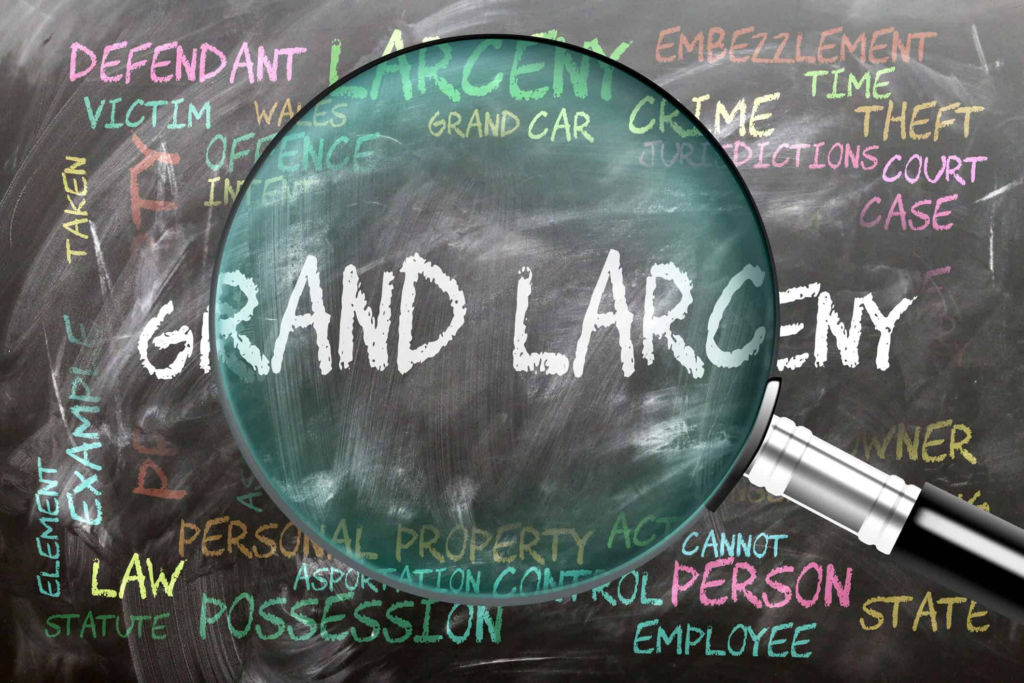
Most legal systems require specific elements to prove what is grand larceny. These elements typically include unlawful taking, lack of consent, intent to permanently deprive, and property value meeting the required threshold.
If any element is missing, the charge may be reduced or dismissed. Courts carefully evaluate evidence to determine whether each requirement is met.
Understanding these elements clarifies why some theft cases result in serious charges while others do not.
What Is Grand Larceny and How Charges Are Filed
The process of charging someone with what is grand larceny involves law enforcement, prosecutors, and the courts. After an investigation, prosecutors decide whether the evidence supports a grand larceny charge.
Charging decisions consider property value, intent, prior criminal history, and applicable statutes. In some cases, charges may be adjusted during plea negotiations or trial.
This process ensures that charges align with both the facts and the law.
What Is Grand Larceny and Potential Criminal Penalties
Penalties play a major role in discussions about what is grand larceny. Because it is often classified as a felony, consequences can be severe.
Punishments may include imprisonment, probation, fines, or restitution to the victim. The length of incarceration and size of fines vary depending on jurisdiction and circumstances.
Felony convictions can also carry long-term consequences such as loss of voting rights, employment limitations, and housing challenges.
What Is Grand Larceny and Misdemeanor Versus Felony Classification
Whether what is grand larceny is treated as a misdemeanor or felony depends on local law and the severity of the offense. In many jurisdictions, grand larceny is automatically considered a felony.
However, some systems allow lower-level grand larceny charges to be treated as misdemeanors under specific conditions. Factors such as prior offenses and property value influence classification.
This flexibility allows courts to tailor outcomes while maintaining legal standards.
What Is Grand Larceny and White-Collar Crime Connections
The question what is grand larceny also arises in discussions of white-collar crime. Certain forms of financial theft, such as embezzlement or fraud, may fall under grand larceny statutes.
Although these crimes do not involve physical theft, they still involve unlawful taking of property. Modern laws recognize that financial misconduct can cause harm equal to or greater than traditional theft.
This onnection reflects how grand larceny has evolved alongside economic complexity.
What Is Grand Larceny and Retail Theft Cases
Retail theft frequently prompts searches for what is grand larceny. When shoplifting involves high-value merchandise or repeated offenses, it may escalate to grand larceny.
Retailers often work with law enforcement to document losses and establish intent. Organized retail theft rings are particularly likely to face grand larceny charges.
These cases illustrate how everyday theft scenarios can lead to serious legal outcomes.
What Is Grand Larceny and Motor Vehicle Theft
Vehicle theft is one of the most common examples used to explain what is grand larceny. In many jurisdictions, stealing a car automatically qualifies as grand larceny.
This classification reflects the high value of vehicles and the potential danger associated with their theft. Even temporary unauthorized use can carry serious consequences.
Motor vehicle theft laws emphasize deterrence and public safety.
What Is Grand Larceny and Juvenile Offenders
Juvenile cases raise unique considerations when asking what is grand larceny. While minors can be charged with serious offenses, juvenile justice systems often focus on rehabilitation rather than punishment.
Penalties may include counseling, restitution, or supervised programs instead of incarceration. However, serious or repeat offenses can still carry significant consequences.
This balance reflects the legal system’s approach to youth accountability and development.
What Is Grand Larceny and Defenses in Legal Proceedings
Legal defenses are another aspect of what is grand larceny. Defendants may challenge elements such as intent, ownership, or property value.
If the accused believed they had a legal right to the property, intent may be disputed. Errors in valuation or evidence collection can also affect outcomes.
Defense strategies focus on ensuring the law is applied fairly and accurately.
What Is Grand Larceny and Plea Bargaining
Plea bargaining is common in cases involving what is grand larceny. Prosecutors and defense attorneys may negotiate reduced charges in exchange for a guilty plea.
This process helps manage court resources and can result in lesser penalties. However, plea decisions carry long-term consequences and must be carefully considered.
Plea bargaining reflects practical realities within the criminal justice system.
What Is Grand Larceny and Long-Term Legal Consequences
The long-term impact of what is grand larceny extends beyond immediate penalties. A felony conviction can affect employment, education, and housing opportunities.
Background checks often reveal felony records, influencing hiring and licensing decisions. Some jurisdictions offer expungement or record-sealing options under specific conditions.
Understanding these consequences highlights the seriousness of grand larceny charges.
What Is Grand Larceny and Public Awareness
Public understanding of what is grand larceny helps promote legal awareness and deterrence. Many people underestimate how quickly theft can escalate into a felony offense.
Education about theft laws encourages responsible behavior and informed decision-making. Awareness also helps victims understand their rights and legal options.
Clear information supports fairness and accountability within society.
What Is Grand Larceny and Differences Across Jurisdictions
Jurisdictional differences play a major role in defining what is grand larceny. Laws vary between countries, states, and regions, leading to different thresholds and penalties.
Someone charged in one jurisdiction may face very different consequences elsewhere. This variation underscores the importance of local legal knowledge.
Legal definitions evolve as lawmakers respond to economic and social changes.
What Is Grand Larceny and Why Legal Definitions Matter
Precise definitions are essential when discussing what is grand larceny. Clear legal language ensures consistency, fairness, and due process.
Without defined standards, enforcement could become arbitrary or unjust. Legal clarity protects both the accused and the public.
This precision is a cornerstone of criminal justice systems.
Conclusion: What Is Grand Larceny in a Modern Legal Context
In conclusion, what is grand larceny refers to a serious theft offense defined by property value, intent, and legal classification. It carries significant penalties and long-term consequences that extend far beyond the act itself.
Understanding grand larceny helps individuals recognize legal boundaries and the seriousness of theft-related crimes. Laws continue to evolve, but the core principles of ownership, intent, and accountability remain central.
Awareness and education remain the best tools for preventing legal trouble and promoting respect for property rights.
