


In today’s fast-moving and information-rich world, the ability to think clearly and make reasoned decisions has become more important than ever. People are constantly exposed to opinions, data, and claims that demand careful evaluation. This is where critical thinking exercises play a vital role. They help individuals develop the skills needed to analyze information, question assumptions, and reach well-reasoned conclusions.
Rather than being limited to classrooms or academic settings, critical thinking are valuable across all areas of life. From professional decision-making to everyday problem-solving, these exercises strengthen mental habits that promote clarity, fairness, and logical reasoning.
Critical Thinking Exercises and the Meaning of Critical Thought
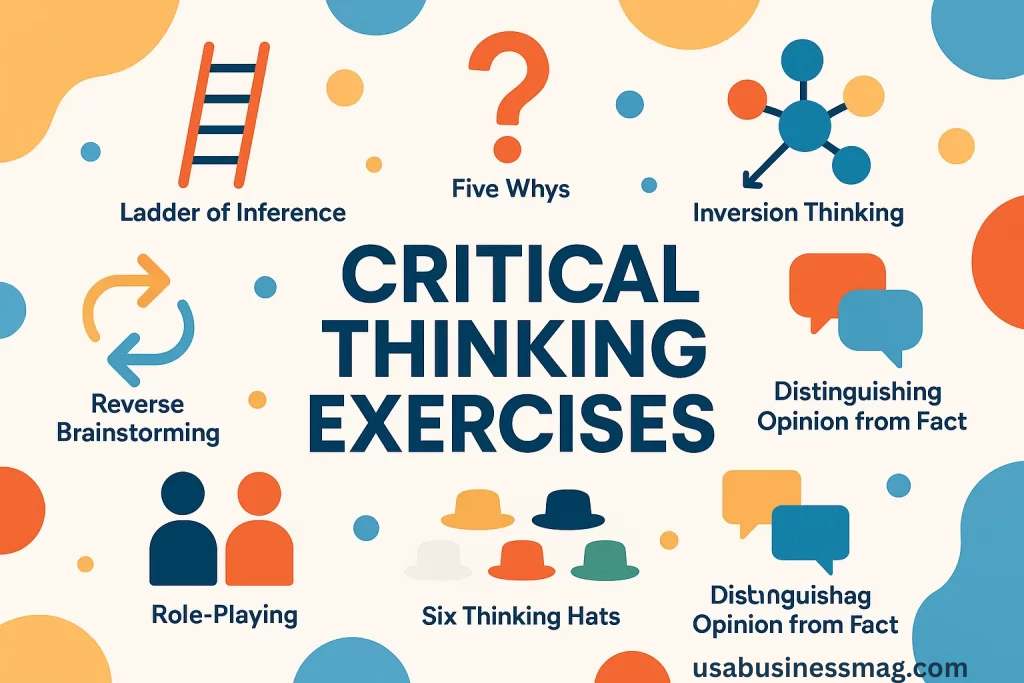
Critical thinking refers to the ability to evaluate information objectively and make judgments based on evidence rather than emotion or assumption. Critical thinking are structured activities designed to sharpen this ability. They encourage people to slow down, examine details, and consider alternative viewpoints.
These exercises focus on asking the right questions, identifying logical connections, and recognizing bias. Over time, regular practice helps transform critical thinking from a conscious effort into a natural habit of mind.
Critical Thinking Exercises in Everyday Life
Critical thinking is not limited to academic problems or formal debates. Everyday decisions often require thoughtful evaluation. Critical thinkingmirror real-life situations such as comparing options, assessing risks, or interpreting information from multiple sources.
By practicing these exercises, individuals become better equipped to handle daily challenges. Whether choosing a career path, managing finances, or evaluating news stories, critical thinking skills lead to more confident and informed decisions.
Critical Thinking Exercises and Problem-Solving Skills
Problem-solving is one of the most practical applications of critical thinking. Critical thinking often involve identifying a problem, analyzing possible causes, and testing potential solutions. This structured approach helps prevent impulsive or poorly informed decisions.
As people practice these exercises, they learn to break complex problems into manageable parts. This skill is especially valuable in professional environments where challenges are rarely simple or straightforward.
Critical Thinking Exercises for Students and Learners
Education systems around the world increasingly recognize the importance of critical thinking. Critical thinkinghelp students move beyond memorization and toward deeper understanding. Instead of simply recalling facts, learners are encouraged to analyze, evaluate, and apply information.
These exercises support long-term learning by promoting curiosity and independent thought. Students who regularly engage in critical thinking exercises are better prepared for advanced study and lifelong learning.
Critical Thinking Exercises and Questioning Techniques
One of the foundations of critical thinking is effective questioning. Critical thinking often emphasize the importance of asking open-ended and probing questions. These questions challenge assumptions and reveal underlying reasoning.
Learning how to ask meaningful questions helps individuals explore issues more deeply. It also encourages active engagement rather than passive acceptance of information.
Critical Thinking Exercises and Logical Reasoning
Logical reasoning is central to clear thinking. Critical thinking frequently involve identifying logical relationships, recognizing patterns, and evaluating arguments. These activities help individuals distinguish between strong reasoning and flawed logic.
Over time, regular exposure to logical challenges improves the ability to spot inconsistencies and unsupported claims. This skill is particularly valuable in environments where persuasive language is used to influence opinions.
Critical Thinking Exercises and Bias Awareness

Bias can influence how people interpret information and make decisions. Critical thinking help individuals recognize personal and societal biases that affect judgment. By examining different perspectives, learners develop a more balanced and fair approach to reasoning.
Understanding bias does not mean eliminating personal viewpoints. Instead, it involves acknowledging their influence and making conscious efforts to consider alternative interpretations.
Critical Thinking Exercises in the Workplace
Modern workplaces value employees who can think independently and solve problems effectively. Critical thinking exercises support skills such as analysis, communication, and decision-making. These abilities contribute to innovation and efficiency.
Employees who practice critical thinking are better equipped to evaluate strategies, assess risks, and adapt to change. As organizations face complex challenges, these skills become increasingly important.
Critical Thinking Exercises and Decision-Making Processes
Decision-making often involves weighing multiple factors and potential outcomes. Critical thinking provide frameworks for evaluating options systematically. They encourage individuals to consider evidence, consequences, and long-term impacts.
By practicing structured decision-making, people become more confident in their choices. This reduces stress and increases satisfaction with outcomes, even when decisions are difficult.
Critical Thinking Exercises and Communication Skills
Clear communication relies on clear thinking. Critical thinking enhance the ability to express ideas logically and persuasively. They also improve listening skills by encouraging careful evaluation of others’ arguments.
Effective communication is not about winning arguments but about understanding issues deeply. Critical thinking supports respectful dialogue and constructive discussion.
Critical Thinking Exercises and Creativity
Although often associated with logic, critical thinking also supports creativity. Critical thinking encourage exploration of multiple solutions and perspectives. This openness fosters innovative thinking.
By questioning assumptions and experimenting with new approaches, individuals can generate original ideas while maintaining logical consistency. Creativity and critical thinking work together rather than opposing each other.
Critical Thinking Exercises for Emotional Intelligence
Emotions influence how people think and act. Critical thinking exercises help individuals recognize emotional responses and separate them from objective analysis. This awareness supports emotional intelligence.
By understanding the role of emotions in decision-making, individuals can respond more thoughtfully in challenging situations. This balance improves personal relationships and professional interactions.
Critical Thinking Exercises and Information Evaluation
The digital age has made information more accessible than ever. Critical thinking teach individuals how to evaluate sources, assess credibility, and verify claims. These skills are essential in an era of misinformation.
Learning how to analyze information critically empowers individuals to make informed judgments. This ability supports responsible citizenship and informed participation in society.
Critical Thinking Exercises and Ethical Reasoning
Ethical decision-making requires careful consideration of values and consequences. Critical thinking exercises often include scenarios that challenge individuals to evaluate ethical dilemmas. These activities promote fairness and responsibility.
By practicing ethical reasoning, individuals develop a stronger sense of accountability. This skill is especially important in leadership and community roles.
Critical Thinking Exercises in Group Settings
Group discussions and collaborative tasks benefit from critical thinking. Critical thinking exercises in group settings encourage participants to share ideas, challenge assumptions, and build consensus.
These exercises help teams avoid groupthink and consider diverse viewpoints. As a result, group decisions tend to be more thoughtful and inclusive.
Critical Thinking Exercises and Self-Reflection
Self-reflection is an essential component of personal growth. Critical thinking exercises often involve examining one’s own reasoning and learning from mistakes. This reflective process supports continuous improvement.
By analyzing past decisions, individuals gain insight into their thinking patterns. This awareness helps refine future choices and strengthens self-confidence.
Critical Thinking Exercises Across Different Disciplines
Critical thinking is valuable across all fields, from science and technology to arts and humanities. Critical thinking exercises can be adapted to suit different disciplines and learning objectives.
This versatility highlights the universal importance of critical thinking. Regardless of background or profession, these skills support effective learning and problem-solving.
Critical Thinking Exercises and Lifelong Learning
Learning does not end with formal education. Critical thinking exercises support lifelong learning by encouraging curiosity and adaptability. They help individuals stay open to new ideas and perspectives.
In a rapidly changing world, the ability to learn continuously is a major advantage. Critical thinking supports this adaptability by promoting thoughtful engagement with new information.
Critical Thinking Exercises and Personal Growth
Personal growth involves understanding oneself and making intentional choices. Critical thinking exercises support this process by encouraging self-awareness and goal setting.
By applying critical thinking to personal challenges, individuals can align their actions with their values. This leads to more meaningful and fulfilling lives.
Critical Thinking Exercises in a Digital Society
Technology has transformed how people interact with information. Critical thinking exercises help individuals navigate digital environments responsibly. They promote thoughtful engagement rather than reactive behavior.
In online spaces, critical thinking supports respectful communication and informed participation. These skills are essential for maintaining healthy digital communities.
Critical Thinking Exercises as a Foundation for Leadership
Effective leadership requires sound judgment and ethical decision-making. Critical thinking exercises help develop the skills leaders need to evaluate situations, consider diverse perspectives, and guide others thoughtfully.
Leaders who practice critical thinking are better equipped to handle uncertainty and inspire trust. This foundation supports sustainable and responsible leadership.
Critical Thinking Exercises and the Future of Education
As education evolves, critical thinking continues to gain importance. Critical thinking exercises prepare learners for challenges that cannot be solved through memorization alone. They emphasize reasoning, adaptability, and problem-solving.
By prioritizing these skills, educational systems can better prepare students for complex and unpredictable futures.
Critical Thinking Exercises and Human Understanding
At its core, critical thinking is about understanding. Critical thinking exercises help individuals make sense of the world by examining evidence, questioning assumptions, and seeking clarity.
This pursuit of understanding supports empathy, cooperation, and informed action. It encourages people to engage thoughtfully with ideas and with each other.
Final Reflection
Critical thinking exercises are more than academic tools; they are essential practices for navigating modern life. By strengthening reasoning, awareness, and judgment, these exercises empower individuals to make thoughtful decisions and engage meaningfully with the world around them. As challenges grow more complex, the value of critical thinking continues to rise, making these exercises a cornerstone of personal and collective development.
