


Introduction
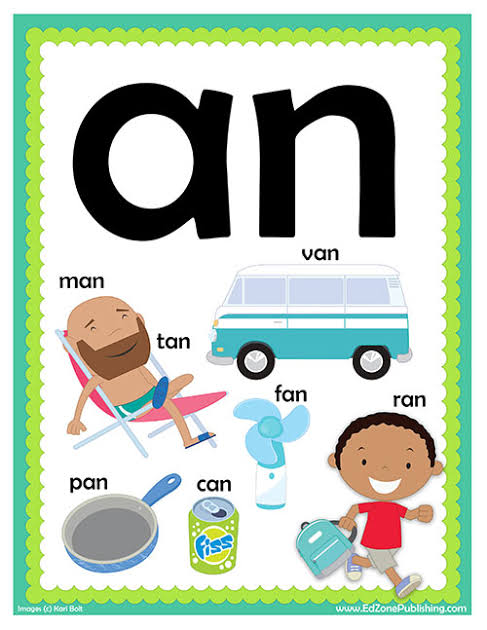
AN words are an important part of early English vocabulary and phonics learning. They belong to a simple word family in which different beginning consonants are combined with the letters “an” to create short, easy-to-read words. Examples include can, fan, man, pan, ran, and van. These words are commonly introduced to preschool, kindergarten, and first-grade students because they help children understand basic spelling patterns and develop reading confidence.
Learning AN words helps young learners recognize letter combinations, pronounce simple words, and understand how changing the first letter can create a completely different word. Parents and teachers can use reading exercises, flashcards, worksheets, and spelling games to make this learning process enjoyable. With regular practice, children can improve their phonics knowledge, vocabulary, pronunciation, and early reading skills.
Quick Facts About AN Words
| Category | Details |
|---|---|
| Topic | AN Words |
| Subject | English Phonics |
| Word Family | -AN Word Family |
| Main Sound | Short A |
| Common Examples | Can, Fan, Man, Pan |
| Other Examples | Ran, Van, Tan, Ban |
| Learning Level | Preschool and Kindergarten |
| Main Skill | Reading and Spelling |
| Teaching Method | Phonics and Word Recognition |
| Educational Benefit | Vocabulary Development |
What Are AN Words?
AN words are simple English words that contain the letter combination “an.” They are part of a phonics word family that helps children recognize similar spelling and pronunciation patterns. Most beginner examples follow a consonant-vowel-consonant structure, where the first letter is a consonant, the middle letter is the short vowel “a,” and the final letter is “n.”
For example, the words can, man, fan, and pan all share the same ending. When children learn how to pronounce one word, they can use the same phonics pattern to read other words in the family. This makes early reading easier because learners do not need to memorize every word separately.
AN words are especially useful for introducing the short A vowel sound. Teachers often begin with familiar words and gradually introduce new examples. This approach helps children understand how letters work together to form meaningful words.
Common AN Words for Kids
There are several simple AN words that children can learn during their early reading lessons. Some of the most common examples are can, fan, man, pan, ran, van, tan, and ban. These words are short and easy to pronounce, making them suitable for beginner readers.
Children can also learn the meanings of these words through pictures and everyday examples. A fan is used to move air, a pan is used for cooking, and a van is a type of vehicle. The word man describes an adult male, while ran is the past tense of run.
Repeated reading helps children recognize these words quickly. Parents can write each word on a flashcard and encourage children to read it aloud. Teachers can also display word-family charts in classrooms to help students remember the shared spelling pattern.
AN Word Family and Phonics Learning
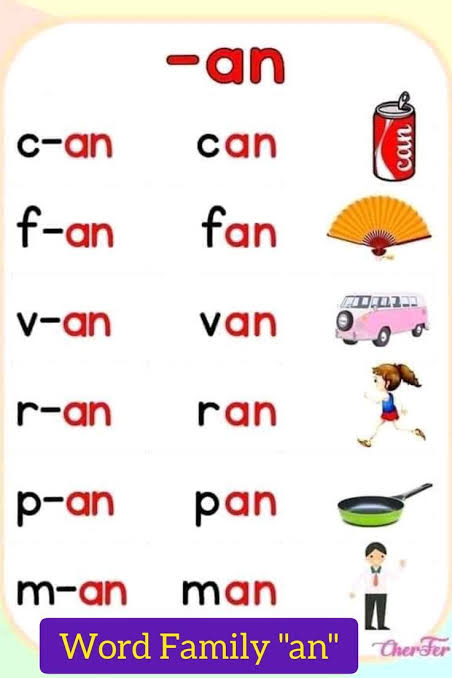
The AN word family is a useful part of phonics instruction because it introduces children to rhyming words and common spelling patterns. Words such as fan, man, can, and ran sound similar because they share the same ending. Recognizing this pattern helps learners understand how words are formed.
Phonics activities usually begin by teaching the individual sounds of letters. Children learn that the letter A makes a short vowel sound in words such as cat and can, while N represents the final consonant sound. When these sounds are blended together, students can read simple words more confidently.
Once children understand the basic pattern, teachers can introduce additional consonants to create more words. This method encourages learners to experiment with letters and recognize similarities between different words. It also provides a foundation for learning other word families, including AT, AP, AM, and AG.
Three-Letter AN Words With Examples
Three-letter AN words are particularly helpful for beginning readers because they follow a simple spelling structure. Examples include can, fan, man, pan, ran, van, and tan. These words are commonly used in kindergarten phonics lessons and early reading worksheets.
Each word has a different meaning, even though the spelling pattern remains similar. For example, “can” may describe the ability to do something or a container, while “fan” can refer to an electrical device or someone who supports a team. Similarly, “pan” describes a cooking utensil, and “van” refers to a vehicle.
Teachers can encourage children to read these words aloud and use them in short sentences. For example, “The man has a fan” and “The van is red” are simple sentences that help learners connect vocabulary with meaning. This practice improves word recognition and sentence reading.
How AN Words Help Children Improve Reading Skills
Learning AN words supports the development of early reading abilities. Children begin to understand that letters represent sounds and that these sounds can be combined to create complete words. This is an important step in learning how to read independently.
Word-family learning also improves spelling recognition. When students become familiar with the “an” ending, they can identify the same pattern in several different words. This reduces the difficulty of reading unfamiliar vocabulary and helps children become more confident.
Another benefit is improved pronunciation. Reading similar words aloud allows children to practice blending consonant and vowel sounds. Regular repetition strengthens their ability to recognize short vowel sounds and pronounce simple English words correctly.
Fun Activities to Teach AN Words
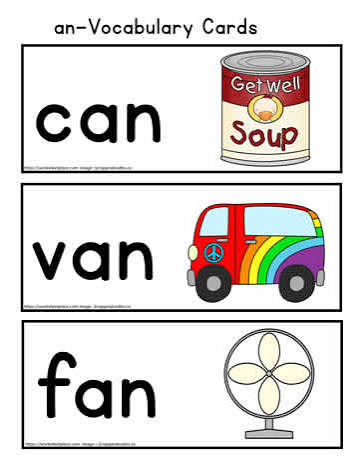
Parents and teachers can use different activities to make AN word learning more interesting. Flashcards are a simple option because children can see each word, pronounce it, and remember its meaning. Pictures of fans, pans, vans, and people can make the activity more visual and engaging.
Word-matching games are another useful teaching method. Children can match a written word with the correct picture or connect rhyming words together. For example, students can identify which words belong to the AN family by finding those that share the same ending sound.
Writing and tracing exercises can also improve learning. Children can trace words such as can, man, fan, and pan before writing them independently. Teachers may also ask students to complete missing letters, arrange letter cards, or create simple sentences using AN words.
AN Words Worksheets and Classroom Practice
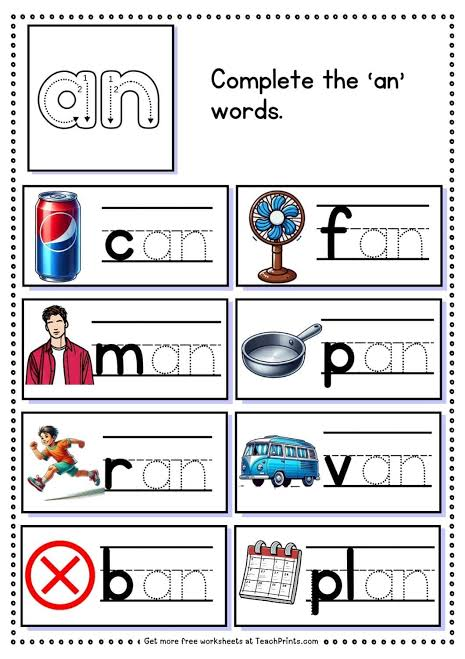
AN words worksheets provide structured practice for young learners. These educational resources commonly include word tracing, picture matching, missing-letter exercises, reading activities, and spelling practice. They help children revise what they have learned while developing confidence in recognizing simple English words.
A missing-letter worksheet may show words such as c_n, f_n, and p_n. Students complete each word by adding the letter A. Another exercise may ask children to circle all the words that belong to the AN word family. These activities strengthen letter recognition and spelling awareness.
Teachers can also organize classroom reading exercises using simple word lists and sentence activities. Students may read words together, identify their rhyming patterns, and write their own examples. Combining reading, speaking, and writing practice makes phonics lessons more effective and enjoyable.
Tips for Parents and Teachers Teaching AN Words
Parents and teachers should introduce AN words gradually rather than expecting children to memorize a long list immediately. Starting with a few familiar examples, such as can, fan, man, and pan, allows learners to understand the spelling pattern before moving to more challenging vocabulary.
Using real-life objects can make learning easier. Parents can show children a fan, a cooking pan, or a picture of a van while explaining the matching words. Connecting vocabulary with familiar objects helps children understand meanings and remember spellings.
Regular revision is also important. A few minutes of daily reading, spelling, and pronunciation practice can help children improve over time. Positive encouragement and enjoyable activities can make young learners more interested in English and help them develop strong foundational literacy skills.
Conclusion
AN words are a valuable part of early English phonics education. Words such as can, fan, man, pan, ran, and van help children understand the short A vowel sound and recognize common spelling patterns. Learning this word family provides a strong foundation for reading, writing, pronunciation, and vocabulary development.
Through flashcards, worksheets, picture matching, spelling games, and simple sentences, children can practice AN words in an enjoyable way. Parents and teachers can use these activities to support early literacy and build confidence in young readers. Mastering simple word families is an important step toward becoming a successful English reader.
