


Kindergarten worksheets are an excellent learning resource for young children who are beginning their educational journey. These worksheets introduce important basic skills through simple exercises, colorful illustrations, tracing activities, puzzles, and games. They help children learn letters, numbers, shapes, colors, words, and basic mathematical concepts while making education enjoyable.
Parents, teachers, and homeschooling families often use kindergarten worksheets to support early childhood education. These printable activities provide children with opportunities to practice what they learn in the classroom and develop confidence through regular exercises. From alphabet tracing to counting objects, kindergarten worksheets offer a variety of activities that encourage curiosity, creativity, and independent learning.
Quick Facts About Kindergarten Worksheets
| Detail | Information |
|---|---|
| Main Topic | Kindergarten Worksheets |
| Target Age | Approximately 4–6 Years |
| Education Level | Early Childhood Education |
| Activity Type | Printable Learning Worksheets |
| Main Subjects | Math, English, Science, and Art |
| Popular Activities | Tracing, Coloring, Matching |
| Learning Skills | Reading, Writing, and Counting |
| Formats | PDF and Printable Pages |
| Suitable For | Home, School, and Homeschooling |
| Main Purpose | Early Learning and Skill Development |
What Are Kindergarten Worksheets?
Kindergarten worksheets are educational activities created for children who are preparing for or attending kindergarten. They introduce basic academic concepts through short, understandable exercises that match the learning abilities of young students. Instead of relying only on textbooks, these worksheets use pictures, letters, numbers, and interactive tasks to make learning more interesting. kindergarten worksheets.
Most kindergarten worksheets focus on foundational skills such as alphabet recognition, handwriting, counting, shapes, colors, and simple vocabulary. Children may be asked to trace letters, identify matching pictures, count objects, complete patterns, or connect words with illustrations. These activities help learners become familiar with important concepts through repetition and practice. kindergarten worksheets.
Printable worksheets are especially useful because they can be downloaded and completed at home or school. Parents can select activities according to their child’s learning level, while teachers can use them to support classroom lessons. Many worksheets are available in PDF format, making them convenient to print and reuse when needed. kindergarten worksheets.
Kindergarten Alphabet and Letter Recognition Worksheets
Alphabet worksheets are among the most important learning resources for kindergarten students. They introduce children to the 26 letters of the English alphabet and help them recognize uppercase and lowercase forms. Young learners gradually become familiar with the appearance, sound, and basic usage of each letter.
Letter tracing activities are particularly helpful for beginners. Children follow dotted lines to practice writing letters and develop better pencil control. Worksheets may include pictures of familiar objects, such as apples for A, balls for B, and cats for C, helping children connect letters with their sounds.
Alphabet matching exercises provide another enjoyable way to practice. Children may match uppercase letters with lowercase letters or identify pictures that begin with a particular sound. Regular practice helps establish early literacy skills and prepares children for more advanced reading and writing activities.
Kindergarten Math Worksheets for Counting and Numbers
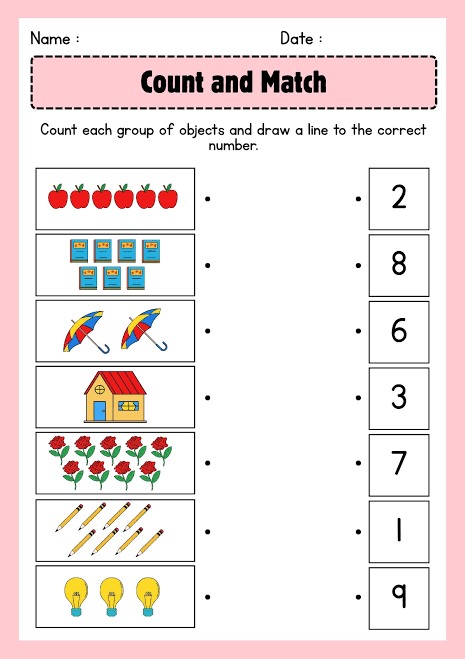
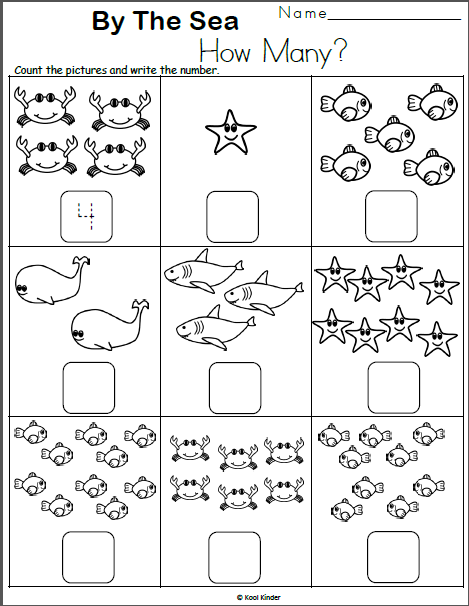
Math worksheets introduce kindergarten students to basic numerical concepts through simple and engaging activities. Counting is usually one of the first skills children practice. Worksheets may show groups of animals, fruits, toys, or other familiar objects that children count and match with the correct numbers.
Number tracing activities help children recognize and write numbers from 1 to 10 and gradually progress toward larger numbers. These exercises encourage familiarity with numerical symbols and improve handwriting control. Some worksheets also introduce number sequences, missing numbers, and simple comparisons.
Basic addition and subtraction activities can be introduced when children are ready. Picture-based exercises make these concepts easier to understand because students can count objects being added or removed. For example, a worksheet may show two apples and one additional apple, asking children to identify the total. These visual activities help build a foundation for future mathematics learning.
Kindergarten Reading and Writing Worksheets
Reading and writing worksheets help children develop early language skills. At the kindergarten level, activities usually focus on recognizing simple words, understanding basic sounds, identifying familiar objects, and forming letters correctly. These exercises introduce children to the relationship between spoken language and written words.
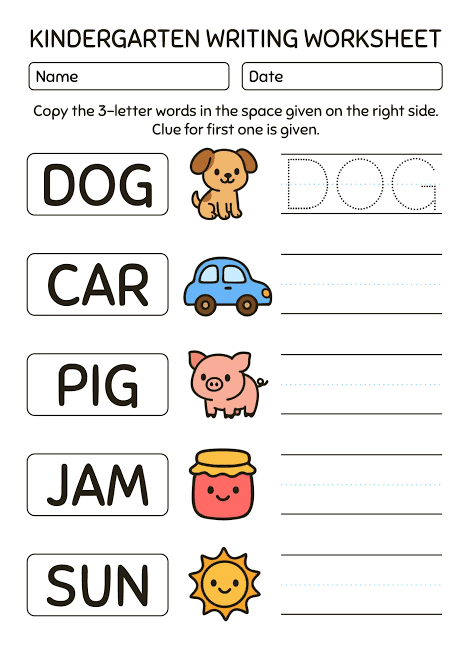
Beginning reading worksheets may include picture-word matching, simple vocabulary exercises, and identifying the first letter of familiar objects. Children can practice words such as sun, dog, cat, book, and tree. Repeated exposure helps them become more comfortable recognizing common words.
Writing worksheets often include tracing lines, copying letters, completing simple words, and practicing short sentences. These activities strengthen hand coordination and introduce children to basic writing patterns. Parents can support learning by reading instructions aloud and encouraging children to pronounce the words they are writing.
Kindergarten Shapes, Colors, and Patterns Worksheets
Learning shapes and colors is an important part of early childhood education. Kindergarten worksheets introduce basic shapes such as circles, squares, triangles, rectangles, and ovals. Children learn to identify these shapes in pictures and recognize them in everyday objects.
Color worksheets help students distinguish between different colors and understand their names. Activities may ask children to color specific objects, match identical colors, or identify the correct color shown in a picture. These exercises combine visual recognition with creativity.
Pattern worksheets introduce children to the idea of repeating sequences. A worksheet might show a red circle, blue square, red circle, and an empty space. Children must identify which shape comes next. Simple patterns help develop observation, logical thinking, and early mathematical understanding.
Kindergarten Science and Nature Worksheets
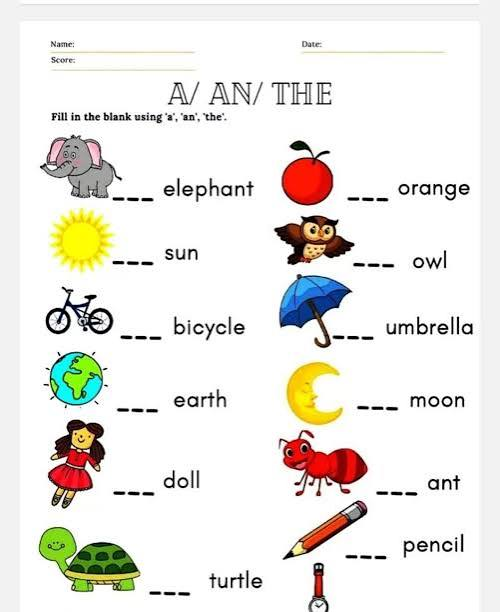
Science worksheets introduce young children to the world around them through simple educational activities. At this stage, science learning often focuses on animals, plants, weather, seasons, the human body, and everyday natural objects. Pictures and short explanations help children understand these topics without complicated terminology.
Animal worksheets may ask students to identify pets, farm animals, wild animals, and birds. Children can match animals with their names, recognize animal sounds, or connect animals with their habitats. These activities introduce basic knowledge about living things.
Nature worksheets can include activities about plants, trees, flowers, rain, sunshine, and different seasons. Children may label simple pictures, identify weather conditions, or learn what plants need to grow. These exercises encourage curiosity and help learners develop an interest in their environment.
Kindergarten Coloring, Matching, and Fine Motor Activities
Coloring worksheets provide young children with an opportunity to explore creativity while practicing hand control. Simple illustrations of animals, vehicles, fruits, and everyday objects are commonly used in kindergarten activities. Children can follow instructions or choose their own colors to complete the pictures.
Matching worksheets encourage visual recognition and comparison. Students may connect identical pictures, match objects with their shadows, or pair words with illustrations. These activities help children notice similarities and differences while strengthening observation skills.
Fine motor activities are equally important during kindergarten. Tracing straight lines, curved lines, zigzags, and simple shapes helps children practice controlled hand movements. Cutting and pasting activities, when supervised by an adult, can also support coordination. These exercises prepare children for handwriting and other classroom tasks.
Free Printable Kindergarten Worksheets for Home and School
Free printable kindergarten worksheets make early learning more accessible for parents and teachers. Many educational websites provide collections of downloadable activities covering different subjects and skill levels. These resources can include alphabet practice, number recognition, simple math, handwriting, coloring, and picture-based puzzles.
Parents can print worksheets to provide additional practice at home. A short daily activity can help children review classroom lessons and become more confident with basic concepts. However, worksheets should be combined with reading, conversation, play, and hands-on activities to create a balanced learning experience.
Teachers can organize printable worksheets according to classroom topics. For example, an alphabet lesson may include letter tracing and picture matching, while a mathematics lesson may focus on counting and number recognition. Keeping worksheets organized by subject makes it easier to monitor children’s progress and identify areas where additional practice may be helpful.
How to Choose the Best Kindergarten Worksheets
Choosing suitable kindergarten worksheets begins with understanding a child’s current abilities. Some children may already recognize most letters, while others may still be learning basic shapes and colors. Selecting activities that match their development makes learning more comfortable and productive.
The design of a worksheet also matters. Young children generally benefit from large letters, clear pictures, simple instructions, and enough space to complete each exercise. Worksheets with too much text or too many complicated tasks can make learning unnecessarily difficult.
It is also helpful to choose activities that encourage participation rather than memorization alone. Picture matching, coloring, counting objects, tracing, and simple puzzles provide variety and keep children interested. Parents and teachers should celebrate effort and progress instead of expecting every exercise to be completed perfectly.
Conclusion
Kindergarten worksheets are valuable educational resources that support children’s early learning and development. They introduce important skills in reading, writing, mathematics, science, and creative activities through simple and enjoyable exercises. From alphabet tracing and number counting to coloring and shape recognition, these worksheets provide many opportunities for young learners to practice essential concepts.
Parents, teachers, and homeschooling families can use printable worksheets to support lessons and encourage regular learning at home. Choosing age-appropriate activities, providing gentle guidance, and combining worksheets with hands-on play can create a positive educational experience. With the right resources, kindergarten worksheets can make the first steps of learning more enjoyable, engaging, and rewarding.
